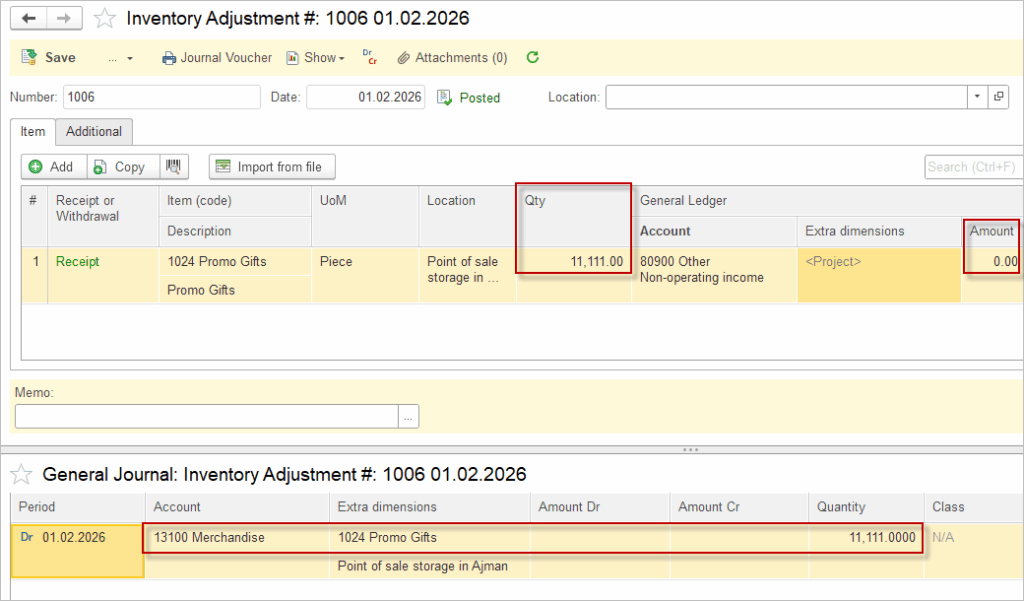
Zero-value inventory refers to stock items tracked by quantity only, with no monetary cost assigned.
AccountingSuite fully supports zero-valued inventory, allowing quantity tracking without amounts for flexible operations.
- Record Item Receipts and Inventory adjustments by quantity alone, no cost field required.
- Inventory reports show quantities;
- No impact on financials: P&L and balance sheet ignore zero-value stock, avoiding prohibited distortions.
___

Certain standards prohibit zero-value entries in inventory accounts to ensure balance sheet accuracy. Please refer to applicable accounting standards to make sure your they permit zero-value tracking.
Increasing the zero-value items with an Inventory Adjustment document results in Dr Inventory account, which has:
- No financial effect: Balance sheet or P&L unchanged (value remains 0).
- Operational benefit: Tracks physical stock for sales fulfillment (e.g., bundle with paid items).
___
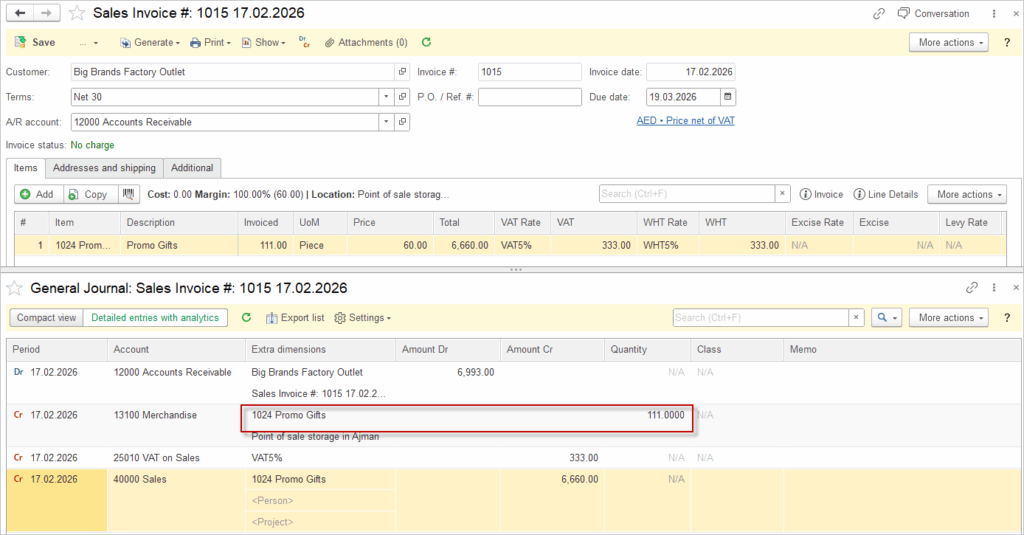
Selling zero-value items triggers standard revenue, accounts receivable, and output VAT postings from the main sale. No COGS is recognized; only the inventory asset quantity decreases.
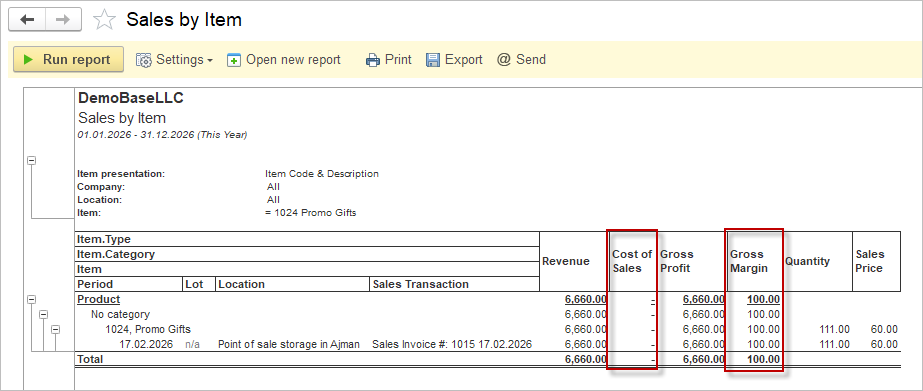
Zero-value inventory sales appear normally in operational reports like Sales by Item. No cost basis exists (COGS = 0), so all attributed revenue becomes gross profit. This reflects pure “contribution” from free items bundled in sales.
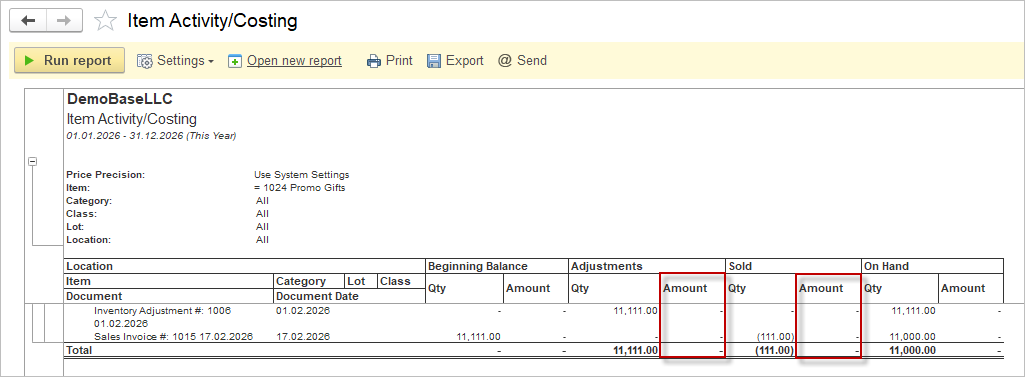
Zero-value inventory items appear seamlessly in item-specific reports like Item Activity/Costing for complete operational traceability. The reports display full quantity movements (receipts, sales, adjustments) with zero amounts consistently, linking back to source documents.